Painless Gastric Sleeve
Surgery
Gastric sleeve surgery with minimised pain, nausea and vomiting through the paragastric block technique — drain-free and NGT-free where possible. Schedule a free preliminary assessment with Assoc. Prof. Dr. Kağan Katar.

Simulate your results before surgery
Enter your weight, height and health details to interactively explore your expected weight loss, timeline and health improvements.
Paragastric Block — Painless Gastric Sleeve
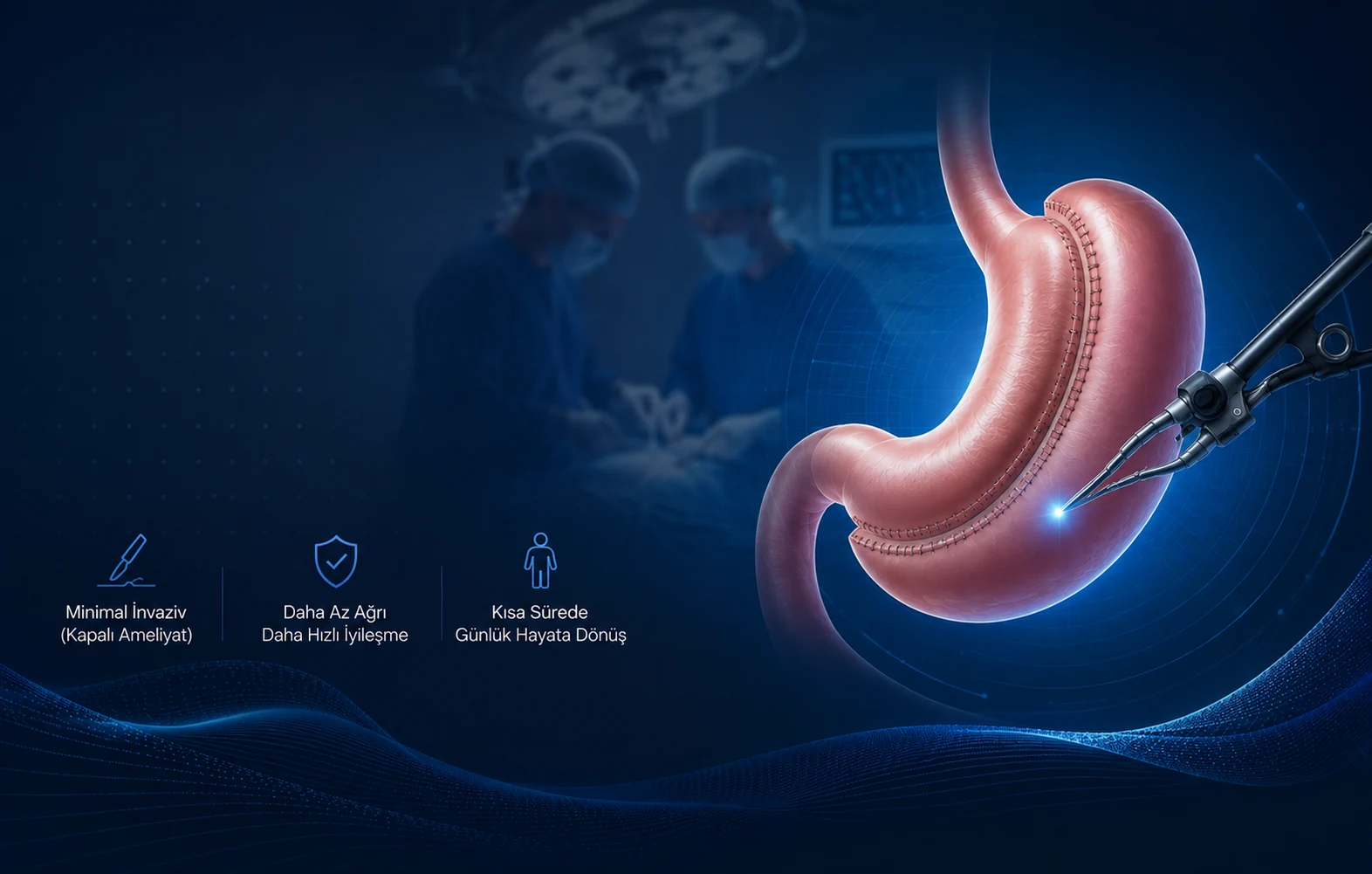
The surgical steps are the same as conventional sleeve gastrectomy — what differs is the pain management and recovery protocol. The paragastric block is a regional pain control technique applied to the tissue surrounding the stomach during surgery. The goal is to minimise pain, nausea and vomiting at their source, improving the patient's comfort throughout recovery.
Bariatric & Metabolic Surgery
From non-surgical weight-loss options to complex revision cases — a comprehensive range of procedures for every patient profile.
Painless Gastric Sleeve Surgery
Paragastric block for less pain and nausea. Drain-free, NGT-free protocol with a focus on rapid, comfortable recovery.
Learn More →Gastric Sleeve Surgery
Sleeve gastrectomy: laparoscopic removal of approximately 80% of the stomach — the world's most performed bariatric procedure.
Learn More →Gastric Bypass Surgery
RNY or mini bypass — combining volume restriction with intestinal rerouting for powerful weight loss and metabolic results.
Learn More →Diabetes / Metabolic Surgery
Surgical management of Type 2 diabetes — reducing or eliminating insulin dependency through carefully selected procedures.
Learn More →Revision Surgery
Correction or conversion of a previous bariatric procedure — for insufficient weight loss, regain or complications.
Learn More →Gastric Balloon
Non-surgical endoscopic weight-loss option. A temporary balloon helps establish healthier eating habits over 6–12 months.
Learn More →Advanced Laparoscopic Surgery
Minimally invasive laparoscopic solutions — from reflux surgery to oncological cases.
Laparoscopic Reflux Surgery
Nissen fundoplication and anti-reflux procedures for gastro-oesophageal reflux disease (GERD).
Learn More →Gallbladder Surgery
Laparoscopic cholecystectomy for gallstones and gallbladder disease — same-day or next-day discharge.
Learn More →Hernia Surgery
Laparoscopic repair of inguinal, umbilical, incisional and hiatal hernias with low recurrence rates.
Learn More →Oncological Surgery
Minimally invasive laparoscopic surgery for gastric, colorectal and other gastrointestinal cancers.
Learn More →
Assoc. Prof. Dr. Mehmet Kağan Katar
Assoc. Prof. Dr. Kağan Katar is a specialist in bariatric and metabolic surgery and advanced laparoscopic general surgery. Throughout his academic career he has published internationally peer-reviewed work on the paragastric block technique — a regional pain control method he integrates into sleeve gastrectomy to minimise post-operative discomfort.
After completing his general surgery residency at Ankara Numune Training and Research Hospital, Dr. Katar undertook clinical training in Warsaw and was awarded the title of Associate Professor in 2021. He is a member of the Bariatric and Metabolic Surgery Society (BMCD), the Turkish Surgical Society (TCD), and the Turkish Medical Association (TTB).
Common Questions
The most frequently asked questions about gastric sleeve and bariatric surgery.
"Painless" does not mean zero pain after surgery. The paragastric block technique aims to significantly reduce pain, nausea and vomiting — enabling patients to need fewer painkillers and mobilise earlier. Individual results vary from person to person.
Gastric sleeve surgery is generally considered for adults with a BMI of 40 or above, or a BMI of 35 or above with obesity-related conditions such as Type 2 diabetes, hypertension or sleep apnoea. Final eligibility is determined after examination, investigations and a full assessment with the surgeon.
The paragastric block is a regional pain control technique applied to the tissue surrounding the stomach during surgery. By temporarily reducing pain transmission in this area, it aims to lower post-operative pain and nausea. Assoc. Prof. Dr. Kağan Katar has published internationally peer-reviewed research on this technique.
In suitable patients, yes. Leak tests are performed intra-operatively to verify anastomotic integrity; where appropriate, drains and nasogastric tubes are not used. This decision depends on intraoperative findings and the surgeon's assessment — it may not apply to every patient.
Gastric sleeve (sleeve gastrectomy) reduces stomach volume only; gastric bypass also reroutes part of the small intestine for a combined restrictive and malabsorptive effect. The right procedure depends on BMI, comorbidities and individual health profile — the decision is made with your surgeon after a full assessment.
Are you a suitable candidate?
Share your height and weight and contact us for a free preliminary assessment. We are here to answer your questions and walk you through the process.
Free Preliminary Assessment
The quickest way to find out if you are a suitable candidate is a short preliminary assessment. Fill in the form below or call us directly.
Free Assessment Form
Share a few details and we will get back to you.
The information on this page is for general informational purposes only and does not constitute medical advice. Diagnosis, treatment and surgical eligibility are determined by the physician following examination and investigations. Surgical outcomes vary from patient to patient.